
Enter The Hive Mind
Week of March 4th

Hive Mind brings you weekly insights into DAOs, culture, crypto, and more. Each Friday, our Substack release compiles the week's mini-essays and some favorite links shared from around the space.
Catching up, this week’s roundup includes our writing on Crypto’s GenZ Appeal, Crypto’s Medici Effect, The Next Stage of ICOs, Meme to Utopia, 404s, and Artist Seed Rounds.

Favorite Links
Poof's final chapter in a deep analysis of the '21-'23 NFT cycle.
Memecoins breaking into prediction market territory?
Crypto is great at the absurd, where do these worlds intersect?
Owning the post-human economy, some thoughts around the Autonolas stack.
Community ownership meets Reddit.
A long primer on the future intersections of AI and Crypto.
Thoughts on the stablecoin market structure.
Crypto’s GenZ Appeal
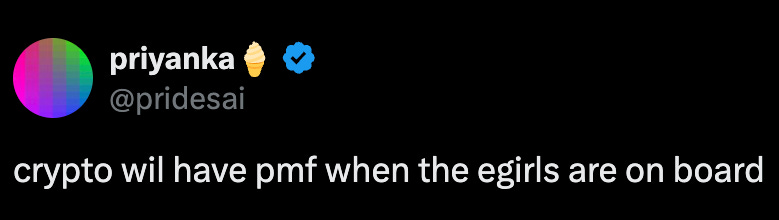
There’s a paradox in Gen Z being seen as very online and their entry into the crypto world remaining in flux. At a glance, TikTok culture and sports betting seem to be two possible gateways; offering familiar touchpoints to the space, in terms of user experience, that will lead Gen Z to inadvertently engaging with crypto. Both digital fluency and entertainment preferences hint at a convergence point as well. The key unlock lies not in the technology itself but in its integration with activities that resonate with this demographic.
TikTok primes Gen Z for micro transactional behaviors and identifying trends (remember corecore) - a cornerstone of crypto's user experience. While TikTok's direct ties to crypto are tenuous, the platform cultivates a mindset ready for blockchain-based systems and programmable media. Leveraging these ingrained online behaviors could be key to unlock in interacting with crypto (never forget PinkyDoll).
Sports betting platforms like Stake, which often settle bets with crypto, are gaining traction through celebrity endorsements and partnerships; another allure towards digital currency transactions. This might not be the most productive approach, but its candidness and tie to existing behaviors are undeniable.
Still, Gen Z's digital relationship is nuanced and often misinterpreted. They value authenticity and are quick to dismiss insincerity. They've grown up alongside internet friends and communities, making the digital world second nature to them, but being extremely online does not equate to an automatic embrace of all things digital. They discern, critique, and are sophisticated in their online engagement.
To start, we need to avoid tired narratives and stereotypes. Metaverse concepts and promises of quick riches have long elicited skepticism. They seek connection, not just accumulation. Recent framing shifts from 'yield' to 'points' in crypto terminology are directionally correct, but crypto has to mirror more than just familiar reward structures. The true catalyst for drawing Gen Z into crypto remains elusive, requiring a deeper understanding of their worldviews and digital habits. Can certain corners of crypto still prioritize connection and long-term perspectives over more mercenary thinking?

Finally, while Twitter is considered a home for crypto conversation, it doesn’t represent Gen Z's preferred platform. Success with this demographic will be measured not just by the usual Twitter cabal, but with its organic integration into spaces where Gen Z already thrives.
Crypto’s Medici Effect
Just as the Medici family catalyzed a renaissance in their era, the digital world is now seeing a similar rebirth, with diverse thinkers uniting to reshape financial and cultural landscapes. Specifically, let’s hone into crypto. Unlike the centralized innovation hubs, crypto's decentralized nature fosters a wide diffusion of ideas and creativity. A new container for the Medici Effect.
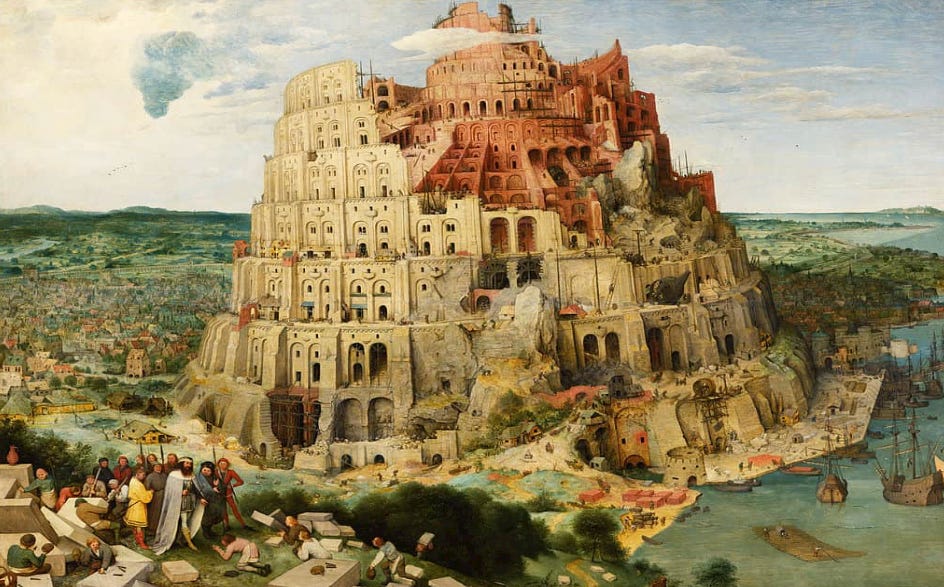
Still, the landscape of crypto patronage faces challenges. Emulating the Medici's strategic investment in social capital, there's a growing desire for a more equitable system that genuinely nurtures creative innovation. Initially focused on monetary gain, crypto's appeal has shifted towards appreciating the intrinsic value of social capital. Success in this space is measured not just by financial returns but also by one's contribution to the ecosystem. Note: the concept of airdrops generally and, most recently, Farcaster and the $DEGEN tipping mechanism shedding light on this intersection with a goal to distribute the token amongst “builders, content creators, and users in the Base and Farcaster ecosystems.”
NFTs have widely democratized patronage by enabling direct support for creators; disrupting traditional gatekeeping structures in hopes of broadening the pool of potential patrons and creative talent while reshaping power dynamics. Above this, we see L2 networks redefining patronage in crypto by supporting early-stage projects and fostering an adaptive economic engine for public goods and innovation. Take a look at these initiatives from Base and Optimism - allowing individuals to capture value in novel ways while enhancing scalability for companies and ensuring financial viability for creators. The MetaDAO could be another interesting push in this direction, focusing on institutional innovation.
With this, the emergence of a curation economy has altered success metrics; giving weight to cultural impact and blurring the lines between creator and consumer. This participatory culture cultivates a personal connection with innovation, where discovery leads to attachment and ownership merges with creation. Crypto's infrastructure unlocks potential for small teams and solo creators to thrive without traditional venture capital support, ensuring that innovative works are not only visible but also financially sustainable. As we navigate this digital renaissance, it's vital to amplify environments where diverse talent thrives and meaningful contributions are duly supported. There’s still so much work to be done, but it’s interesting tracing these shifts early. The culture that crypto proliferates is just as important as the technology.

The Next Stage of ICOs
Crypto’s transformative potential in capital coordination was vividly illustrated during the 2017 bull market, where decentralized networks facilitated rapid capital raises, sidestepping traditional constraints. This era underscored the capability of blockchains and smart contracts to fundamentally alter the financial system. Despite the subsequent downturn and the fading of initial excitement surrounding the ICO boom, certain projects (an example in Maker and Chainlink) emerged as successful outliers, laying the foundation for further growth in the ecosystem.
Recent signs of a thaw in crypto winter, coupled with evolving regulatory perspectives, hint at a resurgence of ICOs. A pivotal court decision favoring Ripple indicates a potential shift towards a more accommodating regulatory environment for ICOs. While this era of innovation laid the groundwork for today's crypto ecosystem, including decentralized exchanges, NFTs, and DAOs, the stage for a new wave of token offerings is set.

It’s possible that we’ll soon see the next generation of ICOs and they will deviate significantly from its predecessors, primarily through the introduction of staked ETH (stETH) and Liquid Staking Derivatives (LSDs) as part of their funding mechanisms. Projects like Morpheus are now proposing that investors stake their ETH, which not only generates yield but also entitles them to additional tokens or points. This innovative use of pooled staked ETH directly funds development, and likely will be augmented with ERC-404 tokens to reward stakers for platform-specific actions. This model could promote a stronger link between project success and contributor rewards, suggesting a more robust economic framework for ICOs.
The economics behind this new ICO model could be compelling for projects. Consider a project that manages to secure $100 million in staked ether. The yield from this could provide a substantial annual budget for development, creating a significant war chest through non-dilutive means. This model offers contributors to this pool greater control, allowing them to retract their stake if the project doesn't meet expectations. This flexibility could significantly reduce the risk of fund misallocation and fraud, ensuring a fairer token distribution and aligning investor interests with project success.
Of course, this model will also introduce new challenges and potential for abuse (outside of complex regulatory considerations). The gamification of token distribution, as seen with platforms like Blur, can drive early adoption and community engagement but opens doors to exploitation. Similarly, while fundraising via staked ETH yield could offer a more sustainable engagement model than airdrops, its stickiness remains crucial for a project’s longevity. The success of any new ICO wave will depend on projects' ability to not only innovate but also to navigate regulatory challenges and build trust, avoiding the pitfalls of their predecessors.

As projects like Morpheus are crafting ICO-like mechanisms that incentivize protocol engagement and sustainable project development, the soon to launch Blast ecosystem also seems primed to take advantage of these frameworks. Are we seeing a shift towards the next wave of ICOs?
Meme to Utopia
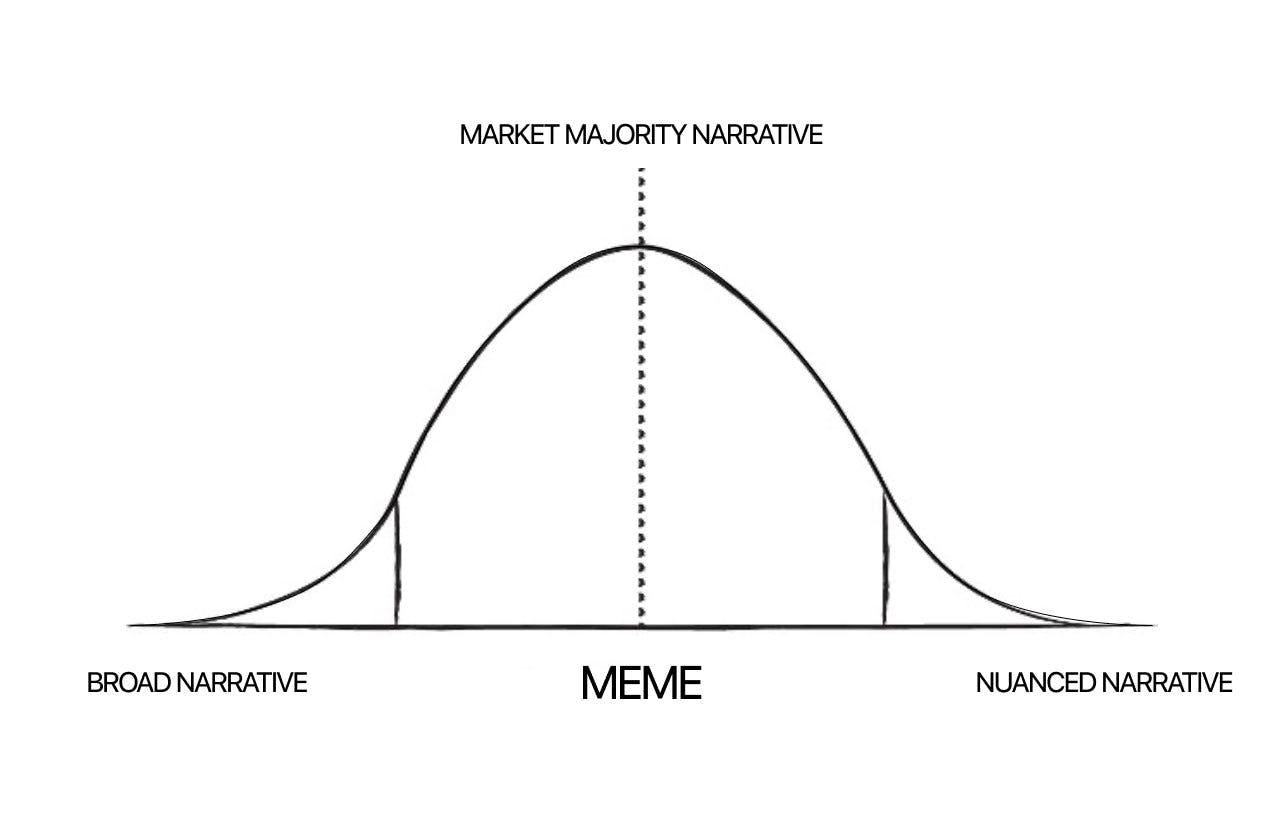
Memecoins have transcended their origins as internet punchlines to become central to digital communities, mirroring the trajectory of NFTs from digital novelties to key cultural assets. These digital currencies are no longer just about fun; they're creating a sense of shared purpose within online spaces. As they become integral to various ecosystems, memecoins continue to capture collective attention as social tools, transforming from ephemeral internet jokes to substantial cultural pillars. This shift is akin to the broader crypto trend where the value often lies in simplicity and shared belief, prompting reflections on Bitcoin's foundational role as the original "memecoin." As skepticism fades, memecoins are establishing new social hierarchies within the ecosystem.
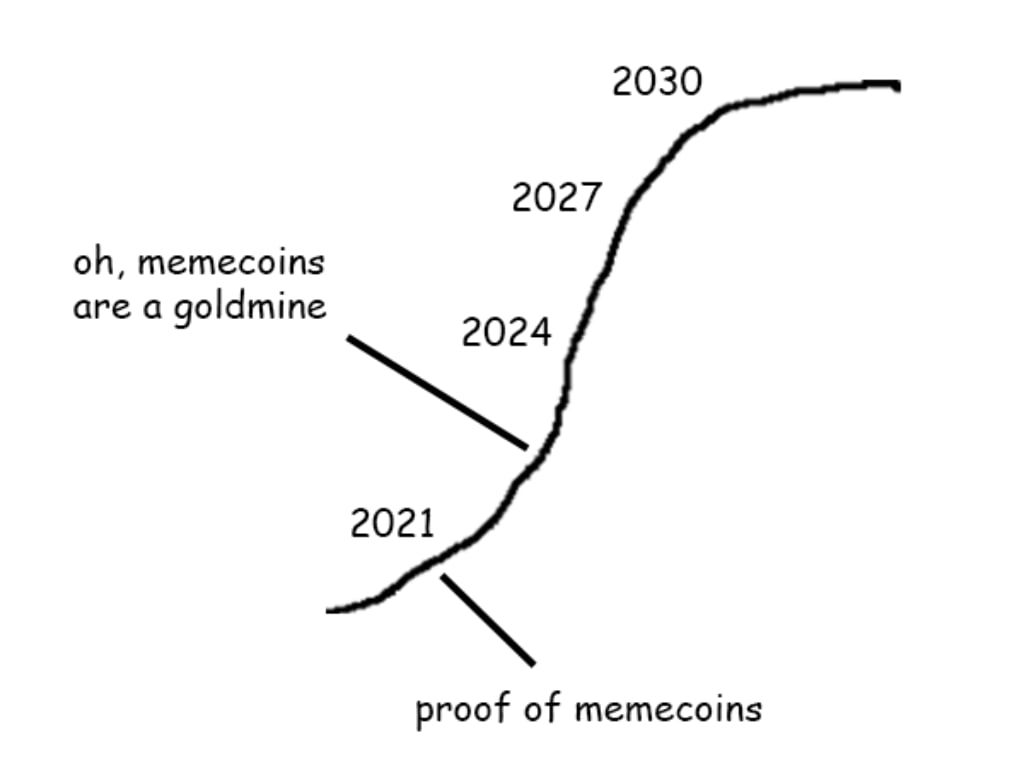
With their appeal boiling down to price and attention, memecoins have recently led the way in terms of fresh wallet inflows, continuing a trend of new digital currencies that drive community investment and growth. Memecoins seem to resonate because they embody an idea, much like a song encapsulates a specific emotion or message. As these coins further embed into digital culture, they're reshaping conversations around brand-community dynamics, suggesting a revolution in how consumer brands and marketing strategies are developed. This sparks questions like the following: do tokens create brands or vice versa? An interesting interplay to consider as these tokens are consumed not just as assets, but as products.
This narrative shift positions memecoins as significant cultural indicators that reflect and shape the dynamics of digital communities. They simplify traditional prediction market mechanisms into clear indicators of cultural sentiment, becoming barometers for the collective psyche. As memecoins mature, they encapsulate the ethos of their communities. There’s a reason why every new blockchain ecosystem seems to have a chosen memecoin that reflects the culture of the chain. Spreading ideas as ideas, memecoins are a pure form of crypto.

Now more than ever, engaging in online communities pairs with tangible rewards. Memecoins epitomize this shift. Despite the paradox of their value often being measured purely in financial terms, the space continues to explore new ways to blend user identity, ownership, and incentives. This ongoing evolution bets on the collective creativity of communities, positioning memecoins as the true cultural barometers of the digital age.
404s
Last month, the introduction of 404 tokens (not yet an ERC token standard, but it looks like it may turn into a standard) by the Pandora team marked a significant milestone in the evolution of digital assets, merging the characteristics of ERC-20 and ERC-721 to create semi-fungible tokens. This new token standard aims to introduce native fractionalization, allowing for easier trading and improved liquidity in NFT markets. The initial success of Pandora and similar projects underscores the market's shift towards fungibility and more efficient trading mechanisms, highlighting 404 tokens as a practical solution to current liquidity issues in the NFT space.
The flexibility of 404 tokens allow for new interactions, such as new experiments with fractional ownership and the possibility of 'rerolling' NFT IDs, though it also introduces potential challenges in asset management, valuation, and regulatory ambiguity. The potential universe for 404s is much vaster than it may appear. Technically, 404 tokens could enable fractional ownership and trading in a wide range of assets, from high-value digital art and virtual real estate to intellectual property and luxury items. They may make investments accessible to a broader audience and improve liquidity for traditionally illiquid assets. They could also facilitate innovative funding and engagement models for creators, charitable projects, and research endeavors, offering a versatile tool for decentralized finance, collective ownership, and peer-to-peer transactions across various sectors.
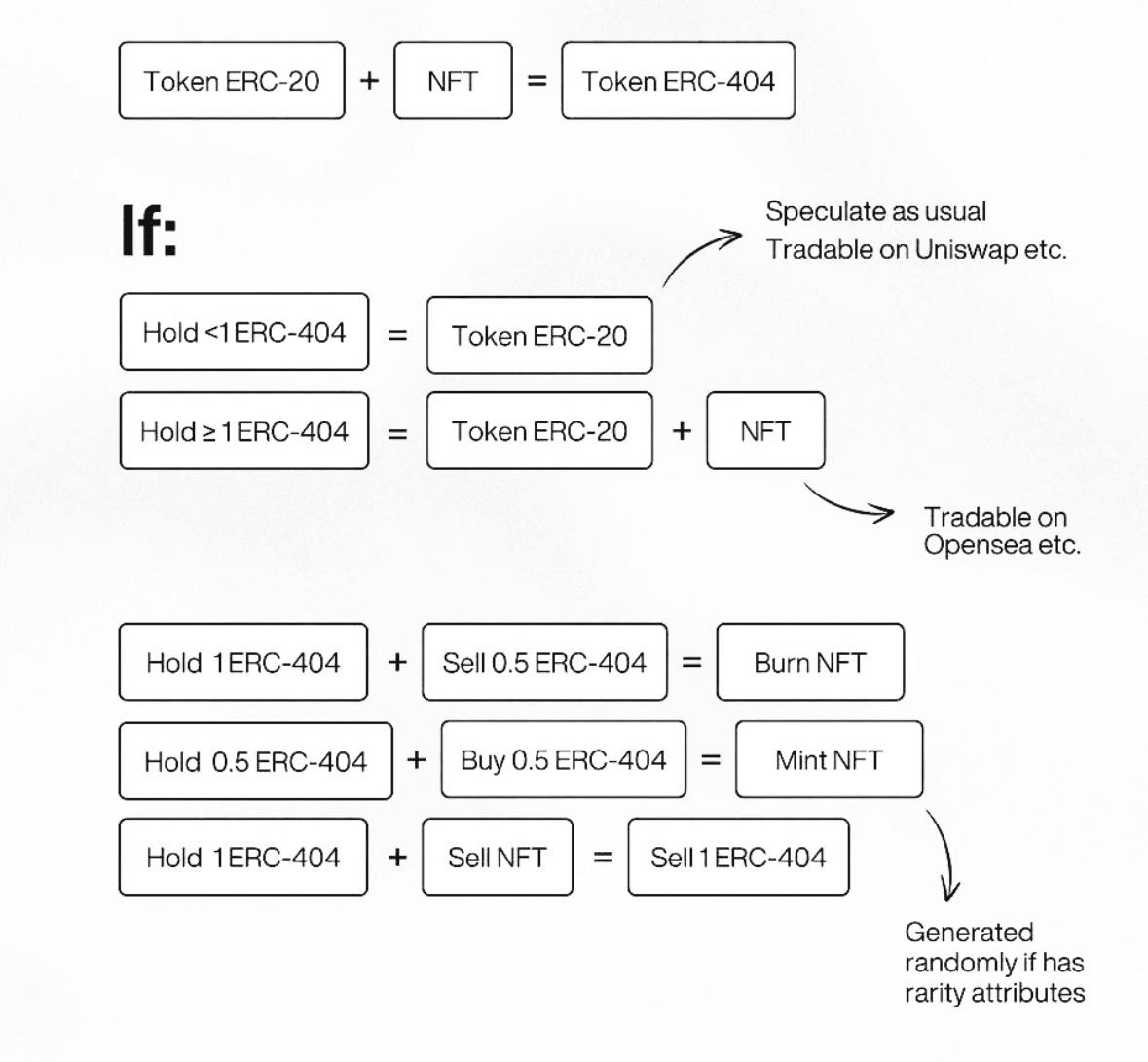
However, the journey of 404 tokens likely will have a number of hurdles. Early adopters have identified significant flaws, such as vulnerabilities in lending vaults and inefficiencies in gas usage, prompting teams to work on refining the standard. This brings to light the fact that 404s on L2s like Base could be under-appreciated; it’s much easier to incorporate new game and trading mechanics as gas fees will be less than a penny soon. The emergence of DN404, a collaborative effort by various Ethereum developers, addresses some of the above challenges by introducing a dual-contract architecture that enhances security, efficiency, and compatibility with existing protocols. DN404 represents a leap forward in the 404 standard, promising a more secure and user-friendly approach to managing semi-fungible tokens. By separating the core logic and ERC-721 interface into two distinct contracts, DN404 ensures the integrity of both token types while optimizing for gas efficiency. This positions DN404 as a potential catalyst for broader adoption of semi-fungible tokens.
As the digital asset landscape continues to evolve, these token standards could bring in a new era of token utility and market efficiency–and if they fulfill their vision–bring us closer to seeing the full technical potential of NFTs. While this standard is still in its infancy, the potential for innovation in community incentives and ownership models appears vast.
Caution is warranted, however, as the full impact of this new standard has yet to be seen. The journey ahead for 404 tokens and their derivatives is filled with both promise and challenges, and the most successful experiments most likely won’t act the same as traditional NFT collections or liquid tokens.
Artist Seed Rounds
Crypto has always flirted with shifting how musicians can support their work (starting with Ujo Music) and the next wave of innovation in this vertical appears to be starting. Evolving the music industry is becoming a bigger issue as we witness the continued decay of the traditional music industry and the evolution of how artists engage with both their craft and audience.
Music distribution, funding, and consumption is changing. Media outlets that once thrived on the independent music scene are now being absorbed by broader lifestyle publications; evidenced by Pitchfork's assimilation into GQ and countless others folding. Streaming platforms like SoundCloud, once seen as more “artist-friendly” distributors, now find themselves on the sales block, an uncertain future. In related news, Universal Music Group recently removed its catalog from TikTok after the massive music company failed to reach a licensing agreement with the platform. The conventional record deal continues to be a double-edged sword, offering financial support at the cost of long-term financial equity and certain aspects of creative control. The historically extractive nature of the music industry and its now increased volatility has implications for artists, both independent and signed, who rely on these platforms for exposure.
Crypto is attempting to correct this imbalance. Early experiments with music NFTs, hope to offer a more equitable share of profits to all contributors of a song (see Songcamp’s Headless Band experiments and this Soulection release) while trying to reframe the artist-listener experience. Still, while these ventures often benefit artists and certain collector subsets, they (so far) fail to resonate with the broader music-listening public.
The next wave of Web3 music will likely empower musicians to redefine success on their own terms; backed by NFTs or not. Daniel Allen's journey, specifically with his and Lyra’s song 'I Just Need,' exemplifies this potential. The “ordinance point” of the song was its August 2023 mint on Sound, with 250 early supporters collecting the record. Today, the song has nearly 9m streams on Spotify alone; a massive success. A few months prior to this song’s release, Daniel Allen’s $1M dollar seed round represented a significant departure from traditional industry funding mechanisms, enabling him to innovate without the constraints of a traditional record label affiliation. The creation of Daniel Allan Entertainment, a corporate entity designed to attract outside investment, is a testament to the viability of treating music projects like startups. This approach not only empowers artists but also offers investors a stake in a potentially diverse and lucrative portfolio.
In many ways, Allen’s journey may signal the start of the next wave of creator controlled media. Allen remains in charge of his career and his creative output and, as regulations around crypto clarify over the upcoming years, may be able to use NFTs, tokens, and other assets to cohere a growing community of fans, supporters (like we’re seeing with Medallion and adjacently in the restaurant industry with Blackbird). We’re seeing the music NFT ecosystem begin to reset and crypto giving creators control will likely continue to change the media landscape.
The question remains: why aren't more artists taking this route? The answer might lie in the industry's reluctance to relinquish control over lucrative masters, but as awareness grows, so too does the appetite for change. The notion of artist seed rounds represents an under-explored paradigm shift, suggesting a future where artists wield unprecedented control over their careers. This transition is underscored by the potential symbiosis between music and the digital zeitgeist of memecoins, with the viral nature and communal ethos of tokens amplifying the intrinsic value of music as a shared cultural idea. While Daniel Allen's artist seed round mirrored traditional startup fundraising, encompassing his entire career, future artist funding might pivot towards more song-specific or modular focus, akin to liquid token launches.